Why I Built Thessari
My son turned six recently. I was six once, in Lesotho—sitting in the dirt outside our house, playing with sticks with the kid next door. At some point a group of other children wandered over, curious about the Bangladeshi boy who had appeared in their neighborhood. They wanted to look at my skin, touch my hair. I don’t remember minding.
My son is six now, and his life looks nothing like that. Which is fine. That’s how time works. But it got me thinking.
Forty is a strange number. You’ve accumulated enough life by then to notice you’ve been living several of them. The kid in Lesotho has almost nothing in common with the engineering student at Waterloo, who barely recognizes the immigrant who landed in Canada in the early 2000s not knowing what came next. Same person, technically. Same passport, more or less.
I realized these were the things I’d actually been collecting. Not accomplishments or possessions, but selves. Versions. Whole worlds I’d moved through and then left behind.
It seemed worth writing down.
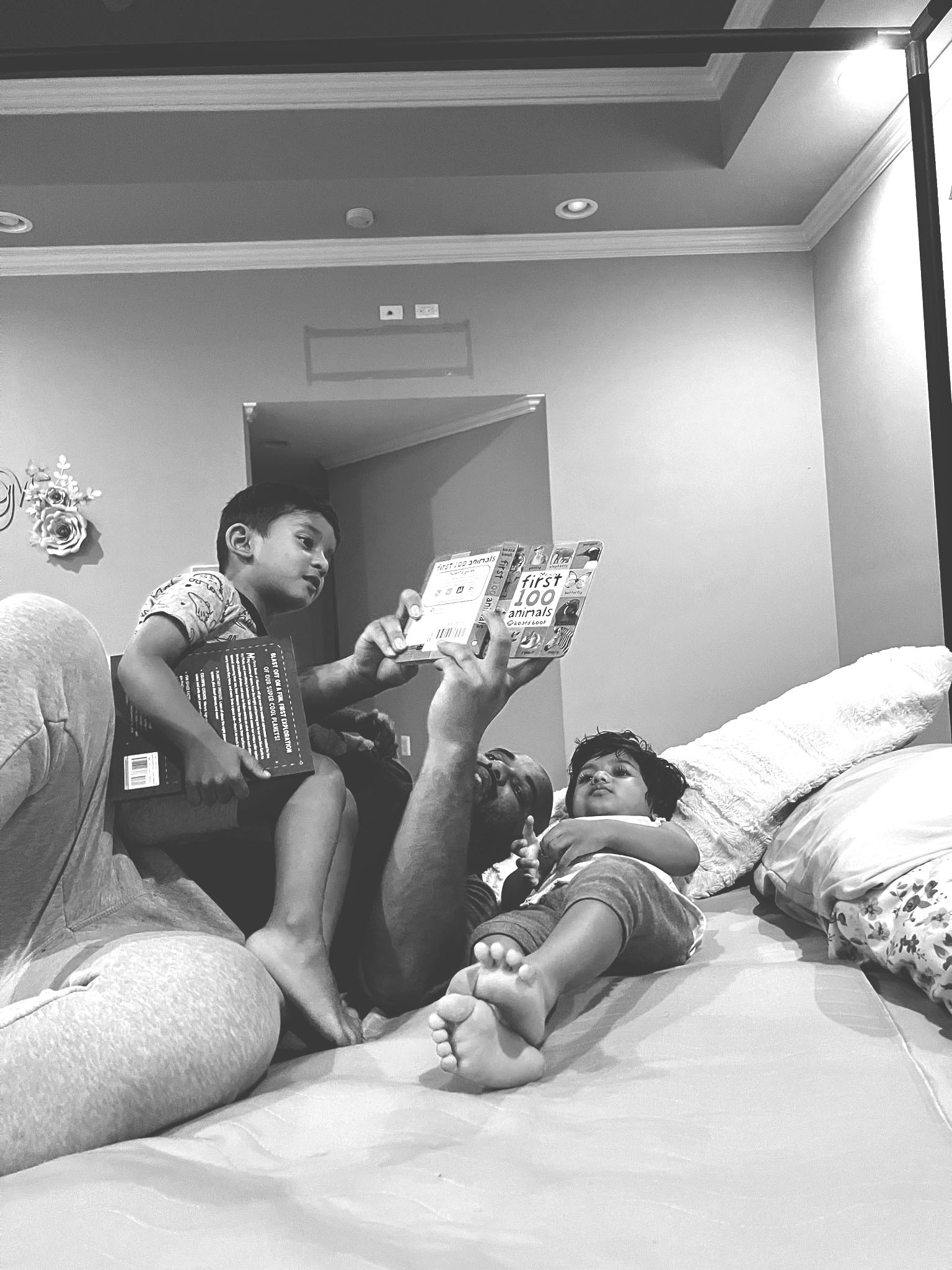
I became a father, and that clarified things.
I think about my parents—my mother, driven and full of life, relentless in ways I still marvel at. My father, the traveler, who left Bangladesh for a PhD in Russia with a light jacket and no money, then spent his life teaching in remote parts of Africa—far from the conservative traditions of home he never fit into. There are old photographs where they look like strangers. People I would have liked to meet. We have the dinner table stories, the familiar ones. But I wanted something more direct. Their voices from back then, thinking thoughts they’ve since forgotten.
That doesn’t exist. So I’m making it, for my children.
Thessari comes from two pieces I stitched together. The Greek thes—a container, a collection. And sari, like the garments woven through with choices and history.
A keeper of stories. That’s what this is.
Essays. Video and recordings too. Not because my children need to understand me—that takes a lifetime, if it happens at all. But so that someday, when they’re older and can see me with some objectivity, they’ll have a feel for who I was. The various people.
The six-year-old in the Lesotho dirt is in here somewhere. The others too.